AMDG

Monday, May 7, 2012

Around the World Embassy Tour 2012: Embassy of Japan


Last Saturday, Robs, the boys and I went to celebrate the 5th anniversary of Passport D.C. 2012 (5 years of unforgettable global journeys through the nation's capital) by going on the "Around the World Embassy Tour."

From the Passport D.C. brochure:

The international community is such a large part of D.C. culture. Being able to explore the world without leaving your neighborhood is a unique feature that D.C. can offer visitors. We’re proud to support building appreciation for the world’s many cultures in our own community.

More than 40 embassies, representing six continents, invite the public to sample extraordinary delights inside their stately mansions and exclusive compounds. Experience food, art, dance, and music. 

What a wonderful opportunity for everyone to "travel and see the world" without the jet lag!  Our first stop was the Embassy of Japan in Massachussetts Avenue.


We finally reached the gates.

And we were in the compound ....


We were hoping that the embassy would look more, well, Japanese ... but their Western-style building still looked nice and solid. Since May 5 is Children's Day, an annual holiday in Japan (nice coincidence that we were there on that day), they had fish kites flying on their flag pole.


Children's Day, which is always on the fifth day of the fifth month, is a national holiday in Japan.  It is when families celebrate the healthy growth and happiness of children.  

The most visible symbol of Children's Day to most people is the koinobori, or fish kite (sometimes called a koi kite or carp kite).  These are colorful windsocks shaped like a long koi.  They are usually tied to a bamboo pole, where the wind catches them and makes them look like they're "swimming."


Families with boys fly huge carp-shaped streamers outside the house and display dolls of famous warriors and other heroes inside. The carp was chosen because it symbolizes strength and success.

According to a Chinese legend, a carp swam upstream to become a dragon.  Since it is energetic and courageous in the way it goes against the current -- it leaps out of the water when it swims -- the koi is a metaphor for parents' hopes for their children, particularly their sons.

After passing by a table where they served us cups of Green Tea, we finally got in the embassy. It was nice to be on foreign soil without having to fly!

Inside, there were displays of traditional Japanese items.

Dolls and Kites


Close-up view of dolls in Japanese costume.

A Little Kite History

The exact date and origin of the kite is not known but it is believed that they were flown in China more than two thousand years ago. One legend suggests that when a Chinese farmer tied a string to his hat to keep it from blowing away in a strong wind, the first kite was born.

Kites were brought to Japan about the 7th century by Buddhist monks from China. They were used to avert evil spirits and to insure rich harvests.


There are about 130 different styles and types of Japanese kites. Each region has its own unique shape. They are normally decorated with characters from Japanese folklore, mythology or have some religious or symbolic meaning.  

All are painted with bright colored natural dyes, sumi (black ink) and constructed from washi paper (hand made paper) and bamboo, or where bamboo is difficult to grow, cypress wood.  Traditionally kites are flown on Children's Day, at religious festivals, public holidays and New Year. 


Based on research, this may be an AIZU-TOJIN kite, which has a peculiar shape compared to other kites. 


This kite may be the EDO or EDO KAKU.  'Edo' is the old name of Tokyo.  One of the most decorative kites today in Japan, it is very popular. Its painting design usually depicts famous historical stories or traditional stories in Japan.


YAKKO-dako is also one of  Japan's most popular kites.  "Yakko" means 'a servant' in ancient times.

I wasn't able to thoroughly read the label and description of this piece, but if I'm not mistaken, it's a miniature model of an elegant Japanese costume.


The traditional Japanese wedding gown is a beautiful garment that can be worn by a person of any size. If a Japanese couple decides to have a Buddhist ceremony or simply a reception party with no religious ceremony at all, the bride would wear an elaborately designed and very colorful, silk kimono like this one. It is a formal gown passed down the ages and still used today as a traditional bridal dress.

If the couple decides to have a Shinto ceremony, the bride will wear a traditional, white bridal kimono, like the one pictured below (though this was not at the embassy exhibit). In Japan, white symbolizes purity, elegance and "new beginning."


These were just some of the things on display at the embassy. On our way out, we posed with a man in a Japanese warrior costume.


And that was our little trip to Japan.
 さよなら今 (Bye now!)

Sources:

Saturday, May 5, 2012

Quotes: Blessed Hildegard von Bingen

+ JMJ +


Painting of Hildegard von Bingen by Tricia Danby

The Creator and Lord of all so loved the world, that He sent His Son for its salvation, the Prince and Savior of the faithful,  who washed and dried our wounds, and from Him also came that most sweet medicine, from which all the good things of salvation flow.   

On Worship:

Be not lax in celebrating.  Be not lazy in the festive service of God.  Be ablaze with enthusiasm.  Let us be an alive, burning offering before the altar of God.

On Humility: 

Thus beware lest you attribute to yourself alone those good qualities which are yours in both your spirit and your works. Rather, attribute them to God, from whom all virtues proceed like sparks from a fire . . .  For whoever is aware that he has good qualities, but ascribes them to himself alone, that person is like an infidel who worships only the works of his own hands.


New Doctor of the Church to be Appointed

+ JMJ +


December 16, 2011. (Romereports.com)

Benedict XVI is set to appoint Blessed Hildegard of Bingen as a Doctor of the Church in October of 2012. She was a German Benedictine nun and was known for her visions and prophecies.  


Hildegard of Bingen lived in the twelfth century. In addition to being a nun, she was a composer, philosopher, physicist and ecologist. A multi-talented woman, and a pioneer for many of these fields during the Middle Ages.

She came from a wealthy family and when she was only eight years old was sent to study in a monastery. She eventually decided to become a nun and later became an abbess.

Her visions and prophecies were recognized by the pope during that time, allowing her to speak about them publicly. 

Since she has not been officially canonized, the ceremony is likely to take place before the pope names her as a Doctor of the Church in October. 

Benedict XVI dedicated several of his general audiences to this German nun, saying that she “served the Church in an age in which it was wounded by the sins of priests and laity”.

“She brought a woman’s insight to the mysteries of the faith. In her many works she contemplated the mystic marriage between God and humanity accomplished in the Incarnation, as well as the spousal union of Christ and the Church. She also explored the vital relationship between God and creation, and our human calling to give glory to God by a life of holiness and virtue.”

So far there are 33 doctors of the Church, only 3 of whom are women. During World Youth Day, Benedict XVI also announced that the Spanish San Juan de Avila would also be appointed as a Doctor of the Church.

With this appointment, the Church recognizes a person's contribution to Catholic theology, which is still felt despite the passage of time.

Sources:

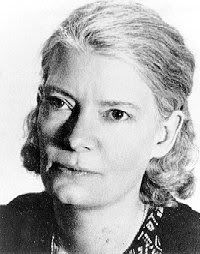
Dorothy Day, Servant of God (1897 – 1980)


+ JMJ +

Dorothy Day Icon


A painting by Nicholas Brian Tsai. The original hangs in Our Lady of Lourdes Church, Oakland, CA. The painter is a member of Holy Trinity Orthodox Cathedral in San Francisco.

The other weekend, Robs and I watched the film, "Entertaining Angels: The Dorothy Day Story," a biopic about the early life of Catholic Worker founder, Dorothy Day, played by Catholic actress, Moira Kelly.

According to Wikipedia, Day was an American journalist, a social activist and a devout Catholic convert.  While watching the movie, I didn't really relate to her political and social activism, which the film focused on.  I was only interested in the spiritual dimension of her story and was touched more by her conversion and her way to holiness.  I later on found this blurb from her Wikipage, which I thought was interesting:

Spiritual Awakening 


Dorothy's parents were nominal Christians, rarely attending church. As a young child, she showed a marked religious streak, though, reading the Bible frequently. 

(That means, even though she was born in a secular-minded family, God had gifted her with a spiritual nature that made her attracted to religion.  Interesting .... )  

When she was ten she started to attend an Episcopalian church, after its rector had convinced their mother to let the Day brothers join the church choir.  She became taken with the liturgy and its music.  She studied the catechism, and was baptized and confirmed in the church. 

(Wow, and to think that she did all of this on her own at a young age and without any encouragement from her parents.)

Despite this, she saw herself as agnostic.

(Unfortunately, without any religious guidance from her family, she still lacked the spiritual formation needed to go in the right direction.  Just goes to show how important it is to have, not only a loving family, but one that fervently practices the Faith.  Still, God was already wooing her .... )

February 9, 1917
Initially Day lived a bohemian life, with one common-law marriage and an abortion,  During this period, however, Day began a period of spiritual awakening which would lead her to embrace Catholicism. She had picked up a rosary in New Orleans during the course of her many moves around the country, and would start to recite the canticles she had learned at her childhood church in Chicago. She began to attend Mass on Sundays at the nearby Catholic church. 

After the birth of her daughter, Tamar Teresa (1926–2008), Day chanced to meet Sister Aloysius, S.C., a Roman Catholic Religious Sister, walking down her street. She asked the Sister how she could have the child baptized. Sister Aloysius helped her, requiring Day to memorize the Baltimore Catechism for this.  

With Tamar, c. 1932

Later on, she went to Sister Aloysius to arrange for her own admission to the Catholic Church. This took place in December 1927, with conditional baptism (due to her prior baptism in the Episcopalian Church) at Our Lady Help of Christians Parish on Staten Island, New York.  Immediately after her baptism, she made her first Confession, and she made her First Communion the following day.  

1930s

In the 1930s, Day worked closely with fellow activist Peter Maurin to establish the Catholic Worker movement, a nonviolent, pacifist movement that continues to combine direct aid for the poor and homeless with nonviolent direct action on their behalf.  Inspired by the Catholic radicalism of Peter Maurin (played in the film by Catholic actor, Martin Sheen), Day set up "The Catholic Worker" as a voice for the poor.  She devoted much of her time to feeding and sheltering New York City's dispossessed men, women, and children. Day said she saw the face of God in these suffering people.

In the early 1940s, she became an Benedictine oblate, which gave her a spiritual practice and connection that sustained her throughout the rest of her life.  

For the last fifty years of her life, she was an activist for the homeless. She founded the Catholic Worker newspaper and social organization, both of which are currently still active. During the war years and the decades that followed, she was jailed numerous times for participating in anti-war and anti-nuclear marches. Around the middle of the century, she was widely regarded as a communist, but, by the time of her death, many viewed her as a living saint.

The cause for Day's canonization is open in the Catholic Church.

It was interesting to find out more about Dorothy Day's life, but the film, for me, was not one of the best.  I would have loved to see more of her interior spiritual progress, and how her faith was a great source of strength for her work, in the same way that Mother Teresa and her Missionaries of Charity relied solely on God and their faith in Him to carry out theirs.  


Yes, Day was a tireless and outspoken champion of the rights of the poor and disenfranchised, but she was not a mere social worker.  The power of her faith and love for God, whom she saw in the poor, was the driving force behind her work.  Because the movie did not develop this most important aspect, it lacked the depth.  One reviewer wrote:

Ultimately, ... too much is skimmed over or completely ignored by this film. We see Day convert, but none of the powerful emotional and spiritual forces leading up to that crucial moment are shown. 

There was one scene, though, that really moved me, and that was when a drunken prostitute named Maggie (played by actress, Heather Graham) stole her money and physically attacked her.  Day initially reacted in anger and was about to hit her back with the cane Maggie used to beat her when, all of a sudden, the Grace of God overcame her, and she was struck by the act of violence she was about to commit -- on this person in front of her, who was, in reality, not the enemy, but Christ -- in the distressing disguise of a poor, lost, broken soul, desperately in need of love.  


Day put down the cane and embraced Maggie  instead, telling her that she loved her and that she was beautiful.  Maggie, taken aback, resisted at first.  But crying bitterly, she finally surrendered to Dorothy's embrace and accepted her loving comfort.

To attain to that level of sanctity, to help others in this way and show them Christ's Love ~ that is the goal, a goal that I can only pray for because I am so weak.


Prayer For The Canonization
of Servant of God
Dorothy Day

Merciful God, you called your servant
Dorothy Day to show us the face of
Jesus in the poor and forsaken.
By constant practice
of the works of mercy,
she embraced poverty and witnessed
steadfastly to justice and peace.
Count her among your saints
and lead us all to become friends of
the poor ones of the earth,
and to recognize you in them.
We ask this through your Son
Jesus Christ, bringer of good news
to the poor. 

Amen


Quotes from Dorothy Day:

We are not expecting Utopia here on this earth. But God meant things to be much easier than we have made them. A man has a natural right to food, clothing, and shelter.  A certain amount of goods is necessary to lead a good life. A family needs work as well as bread. Property is proper to man. We must keep repeating these things. Eternal life begins now.  All the way to heaven is heaven, because He said, "I am the Way." The cross is there, of course, but "in the cross is joy of spirit." And love makes all things easy.

~  On Pilgrimage, 1948

The best thing to do with the best things in life is to give them up.

~  Interviewed in Time (29 December 1975)

Our rule is the works of mercy….   It is the way of sacrifice, worship, a sense of reverence.

~  As quoted in The Encyclopedia of American Catholic History (1997)

Variant: [Practicing] the works of mercy ... is our program, our rule of life.

~  As quoted in The Catholic Worker after Dorothy: Practicing the Works of Mercy in a New Generation (2008) by Dan McKanan

Promotional tagline for the film, "Entertaining Angels : The Dorothy Day Story (1996):"

The title refers to the practice endorsed in the early Christian teachings of St.Paul, of treating strangers as angels or visiting emissaries of royalty or divinity, as written in Hebrews 13:2 ~  Be not forgetful to entertain strangers, for thereby some have entertained angels unawares.

Dorothy Day, Servant of God, pray for us!

Sources:


Saturday, April 14, 2012

Divine Mercy Sunday 2012: Extraordinary Graces

+ JMJ +

What graces are available and how do we receive them?

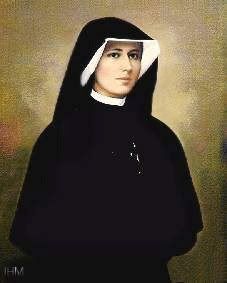
In her Diary, St. Faustina records a special promise given to her by Jesus. He told her to communicate it to the whole world: 

My daughter, tell the whole world about My inconceivable mercy. I desire that the Feast of Mercy be a refuge and shelter for all souls, and especially for poor sinners. I pour out a whole ocean of graces upon those souls who approach the fount of My mercy (699).

In three places in her Diary, St. Faustina records our Lord’s promises of specific, extraordinary graces: 

I want to grant a complete pardon to the souls that will go to Confession and receive Holy Communion on the Feast of My mercy (1109).

Whoever approaches the Fountain of Life on this day will be granted complete forgiveness of sins and punishment (300). 

The soul that will go to Confession and receive Holy Communion will obtain complete forgiveness of sins and punishment (699). 

To receive these graces, the only condition is to receive Holy Communion worthily on Divine Mercy Sunday (or the Vigil celebration) by making a good confession beforehand and staying in the state of grace and trusting in His Divine Mercy. 

(You do not have to go to confession on Mercy Sunday itself. We know from her Diary that St. Faustina made her confession in preparation for Mercy Sunday on the day before (Diary 1072). In fact, all of Lent should be a preparation to make a good confession to receive Holy Communion worthily on Easter Sunday and Divine Mercy Sunday.

The important thing is to receive Holy Communion on these great feast days in a state of grace, and with great trust in God's mercy.

By these conditions, our Lord is emphasizing the value of confession and Holy Communion as miracles of mercy. The Eucharist is Jesus, Himself, the Living God, longing to pour Himself as Mercy into our hearts.

In addition, our Lord says through St. Faustina that we are to perform acts of mercy:
“Yes, the first Sunday after Easter is the Feast of Mercy, but there must also be acts of mercy” (742).

“The graces of My mercy are drawn by means of one vessel only, and that is trust. The more a soul trusts, the more it will receive” (1578).
The worthy reception of the Eucharist on Divine Mercy Sunday is sufficient to obtain the extraordinary graces promised by Jesus. A plenary indulgence, obtained by fulfilling the usual conditions, also is available. 

Divine Mercy Chaplet can be said on any rosary and "...when this chaplet is said at the bedside of a dying person, God's anger is placated and his unfathomable mercy envelops the soul"... from the Diary of St Faustina p. 811.

http://www.thedivinemercy.org/celebrate/greatgrace/graces.php

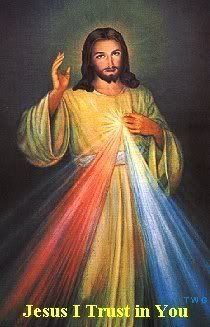
Divine Mercy Sunday 2012: Jesus, I Trust in You!

+ JMJ +


In 2000, Pope John Paul II canonized Saint Faustina Kowalska and at the same time announced that Divine Mercy Sunday would be celebrated by the universal Church on the Sunday following Easter Sunday.

At the canonization John Paul II said: "Jesus told Sister Faustina: 'Humanity will not find peace until it turns trustfully to divine mercy.'"


How to Practice Divine Mercy

"I demand from you deeds of mercy, which are to arise out of love for Me. You are to show mercy to your neighbors always and everywhere. You must not shrink from this or try to excuse or absolve yourself from it.

I am giving you three ways of exercising mercy toward your neighbor: the first — by deed, the second — by word, the third — by prayer. In these three degrees is contained the fullness of mercy, and it is an unquestionable proof of love for Me. By this means a soul glorifies and pays reverence to My mercy.

Many souls ... are often worried because they do not have the material means with which to carry out an act of mercy. Yet spiritual mercy, which requires neither permissions nor storehouses, is much more meritorious and is within the grasp of every soul.

If a soul does not exercise mercy somehow or other, it will not obtain My mercy on the day of judgment. Oh, if only souls knew how to gather eternal treasure for themselves, they would not be judged, for they would forestall My judgment with their mercy" (1317).
 
http://www.aquinasandmore.com/
 

Tuesday, October 18, 2011

SLED's 30-Second Sales Pitch (Speech & Debate Club: Grade 9, 2011 - 2012)


+ JMJ +

We've finally decided to bite the bullet and join our Speech and Debate Club this schoolyear, which meets after our homeschool co-op bi-weekly.  

For an introductory speech, students had to prepare a 30-second sales pitch in advance, using something which they bring from home (sort of like a show and tell).  Their task was to think of a new and unusual use for this item and attempt to make the best sales pitch in a 30 second time frame.  

Many students aim for the humorous angle in this speech, and it has become a club favorite to see who can come up with the zaniest use for an item. 

This was SLED's speech, which he delivered on Thursday, September 29, 2011.  He decided to use his fencing mask for the speech.


The Fencing Mask 

by SLED

Do you have bad hair days?
Or acne problems?
Do you feel like you’re related to an Orc?
Then, this mask will solve your problems!
It completely hides your face and most of your hair!
It will make you look mysterious and fascinating!
It will give you that enigmatic appeal that only a fencing mask can give!
Hiding behind a mask never felt so good!
Buy now, and save face!

LinkWithin

Related Posts with Thumbnails