AMDG

Showing posts with label Unschooling. Show all posts

Monday, June 7, 2010

Unschooling Quotes

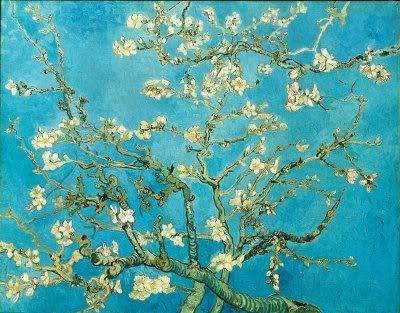
                      Almond Blossoms (1890) by Vincent Van Gogh


Here are some wonderful quotes from both famous and lesser-known men and women, who recognized the value of unschooling and natural learning.


All I am saying in this book can be summed up in two words:  Trust Children.  Nothing could be more simple, or more difficult.  Difficult because to trust children we must first learn to trust ourselves, and most of us were taught as children that we could not be trusted.

~ John Holt, in "How Children Learn"

"Children don’t need to be taught how to learn; they are born learners. They come out of the womb interacting with and exploring their surroundings. Babies are active learners, their burning curiosity motivating them to learn how the world works. And if they are given a safe, supportive environment, they will continue to learn hungrily and naturally – in the manner and at the speed that suits them best."

~  Wendy Priesnitz

I know of nothing more inspiring than that of making discoveries for one’s self.

~  George Washington Carver

“We learn because we want to learn, because it’s important to us, because it’s natural, and because it’s impossible to live in the world and not learn. Then along comes school to mess up a beautiful thing.”

~  Peggy Pirro

The mind is not a vessel to be filled, but a fire to be kindled.  
~  Plutarch

Education is not the filling of a pail but the lighting of a fire.   
~  William Butler Yeats 

If you want to build a ship, don't herd people together to collect wood and don't assign them tasks and work but rather, teach them to long for the endless immensity of the sea.  

~  Antoine de Saint-Exupery

"The teacher who is attempting to teach without inspiring the pupil with a desire to learn is hammering on cold iron." 

~  Horace Mann

"Childhood has it's own way of seeing, thinking, and feeling, and nothing is more foolish than to try to substitute ours for theirs."

~  Jean Jacques Rousseau 

“If a child is to keep alive his inborn sense of wonder, he needs the companionship of at least one adult who can share it, rediscovering with him the joy, excitement and mystery of the world we live in.”

~  Rachel Carson

Love does not dominate; it cultivates.   

~   Johann Wolfgang von Goethe

"Children require guidance and sympathy far more than instruction."

~   Anne Sullivan
 
"Children need models rather than critics."

~   Joseph Joubert (1754-1824), French Philosopher

When I approach a child, he inspires in me two sentiments; tenderness for what he is,
and respect for what he may become.

~    Louis Pasteur 

It is easier to build strong children than to repair broken men.

~  Frederick Douglass

It is easier for a teacher to command than to teach." 

~  John Locke


"It is possible to store the mind with a million facts and still be entirely uneducated."

~  Alec Bourne

Everybody is a genius.  But if you judge a fish by its ability to climb a tree, it will live its whole life believing that it is stupid."

~  Albert Einstein


"It is absurd and anti-life to be a part of a system that compels you to listen to a stranger reading poetry when you want to learn to construct buildings, or to sit with a stranger discussing the construction of buildings when you want to read poetry."

~  John Taylor Gatto

"Knowledge which is acquired under compulsion obtains no hold on the mind." 

~  Plato


"During the school day, there should be extended time for play. Research has shown unequivocally that children learn best when they are interested in the material or activity they are learning. Play — from building contraptions to enacting stories to inventing games — can allow children to satisfy their curiosity about the things that interest them in their own way. It can also help them acquire higher-order thinking skills, like generating testable hypotheses, imagining situations from someone else’s perspective and thinking of alternate solutions."

Susan Engel

"There can be no education without leisure; and without leisure, education is worthless."

~  Sarah Josepha Hale 

“Because schools suffocate children’s hunger to learn, learning appears to be difficult and we assume that children must be externally motivated to do it.”

~  Wendy Priesnitz
   
My education was interrupted only by my schooling.

~  Winston Churchill

"A child educated only at school is an uneducated child." 

~  George Santayana

"We're drowning in information and starving for knowledge." 

~  Rutherford Rogers

"It is a miracle that curiosity survives formal education." 

~  Albert Einstein 

“I have never let my schooling interfere with my education.”
~  Mark Twain


"Education consists mainly in what we have unlearned." 

~  Mark Twain

“Where is the wisdom lost in knowledge? Where is the knowledge lost in information?”

~  T. S. Eliot

"I can't give you a brain, but I can give you a diploma." 
~  L. Frank Baum, The Wizard of Oz


“Four years was enough of Harvard. I still had a lot to learn, but had been given the liberating notion that now I could teach myself.”

~  John Updike

“What does education often do? It makes a straight-cut ditch out of a free, meandering brook.”

~ Henry David Thoreau

“Artificial learning takes what is simple and natural and turns it into a complex array of objectives, goals, measurements, administrators, supervisors, counselors, and transportation experts. Natural education requires only a guide providing direction, and a learner ready to discover and create goals and values that are personally meaningful.”

~  Linda Dobson

“My job is not to teach at all, but to find the opportunities for my kids to learn. NOT knowing something can be an advantage, as it reminds me of the wealth of resources out there in the community and world, if only we are willing to go look for them.”

~  David Albert


When you are genuinely interested in one thing, it will always lead to something else.

~  Eleanor Roosevelt

A man ought to read just as inclination leads him; for what he reads as a task will do him little good.

~  Samuel Johnson

I never did a day's work in my life. It was all fun.

~  Thomas A. Edison

Where my reason, imagination or interest were not engaged, I would not or I could not learn.

~  Winston Churchill

As a child lives today, he will live tomorrow.

~  John Dewey

Education is not a preparation for life; education is life itself.
~  John Dewey

“Education is a process of living and not a preparation for future living.” 

~  John Dewey

Unschooling doesn't mean not learning - it means learning without the trappings of school. It is not unlearning or uneducating. Its only unschooling - it points out a contrast in approaches to learning. My unschooled kids are learning as much or more than their schooled friends. 

~  Pam Sorooshian

If you have a garden and a library, you have everything you need.

~ Marcus Tullius Cicero


Which quote resonated with you the most? 


Sunday, June 6, 2010

Inspirations from John Holt & Our Catholic Faith: Learning Lifestyle # 1

+ JMJ +


One of the learning lifestyles we've incorporated in our home is from the educational philosophy of John Holt.  We've taken aspects of his philosophy that are compatible with the Magisterium of the Church and are joyfully practicing Natural Home Learning in the context of our Catholic Faith.  Ah, the benefits of Catholicizing a secular, but otherwise respectful and child-centered educational philosophy ....


As I had written in my post on Eclectic Home Learning, ever since we've embraced these natural, healthier, respectful, pro-child, pro-family and pro-life learning lifestyles, we no longer experience the stress of fast-food education and rat-race schooling in our home!


We give You thanks, O Lord, for enlightening us to Your Ways and leading us to this natural and beautiful path of learning together, all for Your greater Glory, Amen!


John Holt (1923 - 1985)

(From the Wikipedia entry on him, which has more biography and links than you'll usually find.)

Holt  was an American author and educator, one of the best known proponents of homeschooling.

After many years of working within the school system, Holt became disillusioned with it.  He became convinced that reform of the school system was not possible because it was fundamentally flawed, and began to advocate homeschooling.  However, it would be pointless to simply remove children from the school environment, if parents simply recreated that environment at home. Holt believed that children did not need to be coerced into learning; they would do so naturally if given the freedom to follow their own interests and a rich assortment of resources. This line of thought came to be called unschooling.

Holt's Growing Without Schooling (GWS), founded in 1977, was the nation's first home education newsletter.


What is Unschooling?

In the "Homeschooling Handbook," Mary Griffith writes:

"... unschooling now generally refers to a specific style of homeschooling, in which learning is not separated from living, and children learn mainly by following their own interests.  Children learn best, (Holt) argued, not by being taught, but by being a part of the world, free to explore what most interests them, by having their questions answered as they ask them, and by being treated with respect rather than condescension."

Suzie Andres, author of the book, "Homeschooling with Gentleness: A Catholic Discovers Unschooling," also writes:

"Unschooling is a form of education in which the child is trusted to be the primary agent in learning what he needs to know to lead him to happiness.  The emphasis on trusting the child to be the primary agent of his education distinguishes unschooling from other methods of homeschooling.  While other approaches tend to focus on the teaching done by the parent, unschooling concentrates on the learning done by the student."

Unschooling is not directed by a teacher, parent or curriculum.  Parents do not set up artificial structure for their kids, but they allow their children's natural interests to provide the structure for their learning. To foster a love of learning through interests, parents provide a rich environment for their children to learn in.  This environment consists of a wide range of resources and learning opportunities in the real world so that learning is not artificial or cut-off from real life.  In fact, parents believe that learning happens naturally all the time and does not require coercion.  Unschooling isn't a method, it is a way of looking at children and at life.

Catholic Unschooling

From the Catholic point of view, parents believe that everything God created is good -- including man's innate and fundamental desire to learn.  Aristotle wrote, "All men by nature desire to know." From the beginning, God created human beings to learn. 

In his book, "How Children Learn," John Holt wrote:


"Birds fly, fish swim, man thinks and learns. Therefore, we do not need to motivate children into learning by wheedling, bribing or bullying. We do not need to keep picking away at their minds to make sure they are learning. What we need to do, and all we need to do, is bring as much of the world as we can into the school and classroom (in our case, into their lives); give children as much help and guidance as they ask for; listen respectfully when they feel like talking; and then get out of the way. We can trust them to do the rest."

Home educator and author, Linda Dobson, also wrote:

"Birds (one of God's creatures) don’t go to flight school."

And French philosopher, Simone Weil, wrote: 

“The joy of learning is as indispensable in study as breathing is in running.” 


That is what God meant learning to be -- a joy for every human being.  John Holt was very wise when he advised parents to trust their children.  From the Catholic standpoint, we believe that man was made in God's Image and Likeness.  Therefore, we can trust God's Handiwork by allowing children the freedom to learn according to their interests and strengths.  

As Catholics, we also believe, however, that man is fallen and affected by original sin.  Therefore, the freedom to learn must be tempered with limits -- limits in the form of morals and the teachings of the Church.  Maria Montessori, educator and devout Catholic, recognized the need to achieve a fine balance between these 2 realities, and so she coined the phrase, "freedom within limits."  Catholic Unschooling, therefore, is based on:

1.  The parents' trust in God's Work and, for this reason, in their children, because of the natural desire to learn that God placed in them.

2.  The parents' trust in themselves and in their God-given role as the primary educators of their children, especially since they know their children best and consequently, are the ones most capable to guide -- more than teach -- their children in finding their path to happiness and ultimate union with God.

3.  The parents' trust in God's Loving Care and the inspirations of the Holy Spirit to lead the way in their children's education and in family life.

Traditional schooling and other homeschooling methods that spoonfeed the child and only see his mind as a bucket to be filled, not a fire to be kindled (Plutarch), do not trust the child (God's Handiwork) to be the primary agent of his education because of fear and anxiety.  These methods, along with traditional parenting, were developed as a result of fear and a profound lack of respect for the child.  Though well-intentioned, they are ultimately damaging, since they are not based on love and serve only to bruise a child's spirit and kill his natural love of learning.

We would do well to remember what Jesus said:  "Fear is useless; what is needed is trust!"  (Luke 8:50, Mark 5:36)  Catholic Unschooling gives parents and children daily opportunities to trust in God's Providence and Love, and to focus on their relationship with God and family because that is what matters most in life.

Jesus, I trust in You!


                                                             ... below.  Thanks!


What is Eclectic Home Learning?

+ JMJ +


Eclectic Home Learning is the type of learning we have chosen to implement in our homeschool.  We don't limit ourselves to practicing only one educational philosophy, but we take certain principles from several that suit our children's learning styles and help them thrive.  In our case, we combine what we determine to be the best of Charlotte Mason's, John Holt's and Maria Montessori's educational philosophies for our family, with a certain degree of classical and traditional education.  To elaborate, below are some passages on Eclectic home education from several websites.

This is adapted from a post by Rhonda Miller, 05-28-2010:


A traditional definition of "eclectic" from the Merriam-Webster's Dictionary says, "selecting what appears to be best in various doctrines, methods, or styles; composed of elements drawn from various sources".

Therefore, it is fitting to say that eclectic homeschoolers examine the many methods of homeschooling and then select the methods and/or learning lifestyles that are best suited to their children's needs in each subject of study.

Some homeschoolers, though, especially in their first year of homeschooling, prefer the uniformity of a boxed curriculum and the safety net it provides in being all-inclusive. But as one mother said, "It IS much easier if everyone learned exactly the same, LOL, the way it's done in schools. But it's not as much FUN though."
Miller continues:

Thankfully, after a few years under my belt, I began to understand that all learning did not have to come from the same source. That's when I ventured out and began selecting different methods based on each child's learning style and ability. Instead of selecting one flavor that only one child liked, I could select all the flavors that made everyone happy!  It was at that point that I could see improvements in my children's learning.  

An eclectic education is one in which a solid educational foundation can be built based on one's own views, morals, and belief system. If something doesn't work, it can be put aside and another way can be explored. It's all about what works best for your family!  Just as all flavors of cookies shouldn't go into the same jar, all flavors of kids shouldn't be forced to use the same method of study!

From me, Shelley (Sweetums5):

Modifying a child's education according to his abilities and interests involves more work for the parents, but it is worth the trouble because it fosters a love of learning in the child that lasts a lifetime.  

This customized form of education is difficult to implement in schools because of the large number of students enrolled.  Instead of letting the curriculum serve the student, because of the way schools are set up, the students have to serve the curriculum, whether it fits their learning styles or not.  The opportunity to customize a child's education according to his strengths and interests is one of the many advantages home education has over schools.

From the Time 4 Learning website:

Eclectic homeschooling is the result of a parent's commitment to provide a highly individualized education plan for each of their children, based on their child’s strengths, learning styles, and interests. Eclectic homeschoolers see value in a variety of different educational methods. 

They pick and choose what works for their families, often coming up with a hodgepodge of ideas that they then tweak and fine-tune to fit the specific needs of their children.  While actual statistics are hard to come by, we believe most homeschooling families use an eclectic approach to their children’s education.

Another mom shared:

“I had to tweak what we were doing. I had a vision of what I wanted our homeschooling days to be like, but my daughter hated doing the expensive boxed curriculum we had purchased. She said she might as well have stayed at school with all the workbooks she was doing.”

Resources that eclectic homeschoolers use include online learning, library books, literature lists “borrowed” from other homeschooling styles, courses at local schools, mentors, and bits and pieces of various other curricula.


*The message below is adapted from The Unschooling Handbook, by Mary Griffith*

As young children everyone of us had a natural curiosity to learn our environment, to walk, to talk, to run, to use our senses, to ask why and what about everything we came into contact with. Many of us are "disciplined" and labeled for unguided/ misguided behaviors resulting from our innate desire to learn or be a part of our environment. Many are too often told to settle down, keep quiet, wait till tomorrow... next year, maybe later -- and offered no logical explanation; until we finally give up on self-discoveries (so essential to real learning) and resign to being told what, according to adults, is "important" to learn or memorize.

Our minds are spoon-fed a fast-food education and given little else in-place to prepare for life after school at all, or to satiate our active development, other than sleep/TV/fiction/video games. In short times, it becomes difficult to explore any other interests, to take initiative, or to find purpose and enjoyment in education.

Yet when we seek to learn about our interests in a way that comes naturally to us, we experience true learning that isn't stored and forgotten by our short-term memory immediately after a test. I challenge you to allow learning to become a natural part of life, an everyday means of exploring ideas, improving skills, and developing your talents. Go to the Zoo, visit museums, host a dinner from scratch, create a scrapbook, visit guest speakers, write an article for your favorite magazine, take road trips, form a reading group, create an investment... join and invite your fellow readers on The Wall. The possibilities for learning are exciting and endless.

Eclectic Home Learning in our Family:

I have taken what is best for our family's needs from the rich educational philosophies of John Holt, Maria Montessori and Charlotte Mason to comprise our own blend of Eclectic Home Education.  Our children have thrived on these learning lifestyles.

I will be writing a post on each of these learning lifestyles and the benefits we've derived from them.  

Lastly, we also practice Melissa Wiley's concept of Tidal Homeschooling (Melissa is a Catholic homeschooling mom of 6 and author of the prequels to Laura Ingalls Wilder's "Little House" books), and Dr. Mary Hood's Relaxed Homeschool Mindset.

Ever since we've embraced these natural, healthier, respectful, pro-family and pro-life learning lifestyles, we no longer experience the stress of fast-food education and rat-race schooling in our home.

Lastly, here is a series of posts I've just put together on John Holt's educational philosophy:


LinkWithin

Related Posts with Thumbnails